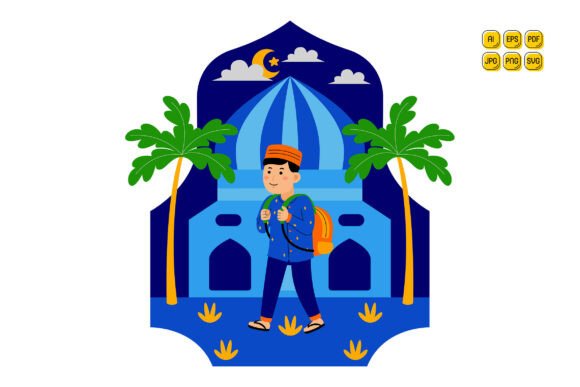
Man Walking Towards Mosque with Backpack
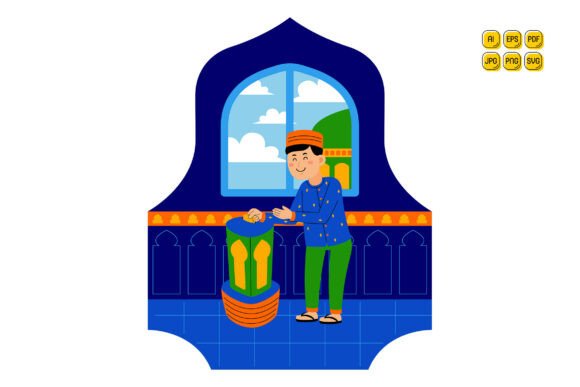
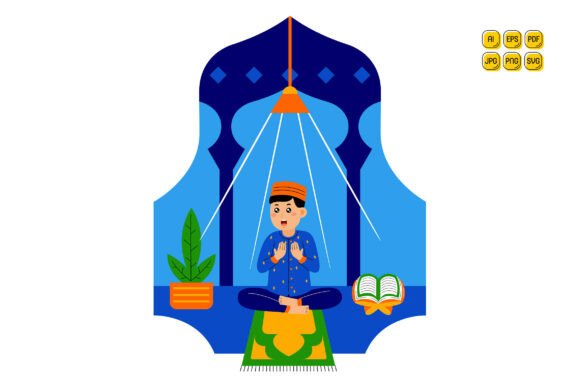
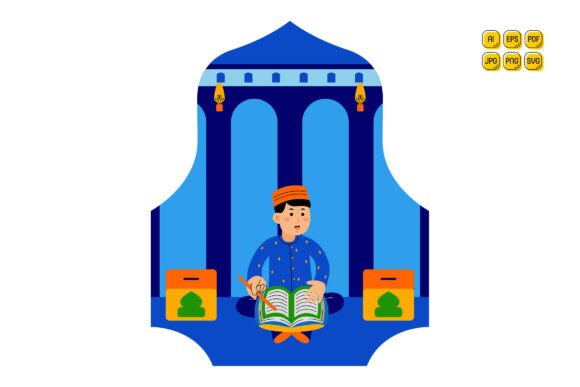
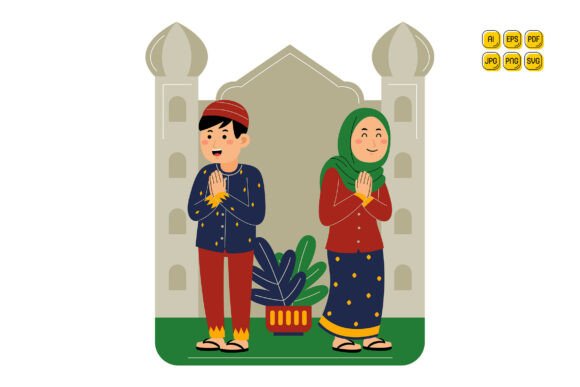
In today’s fast-paced digital landscape, visual storytelling isn’t just about aesthetics—it’s about intention, inclusivity, and adaptability. The Man Walking Towards Mosque with Backpack illustration embodies a quiet but powerful convergence of cultural resonance, modern lifestyle, and design flexibility. It depicts a figure in motion—purposeful, grounded, carrying both physical and symbolic weight—moving toward a place of reflection, community, and identity. This isn’t a static image; it’s a versatile visual anchor designed to support real-world communication needs across industries and audiences.
Why This Illustration Fits Today’s Creative and Business Needs
Designers, marketers, educators, and small business owners increasingly seek assets that balance authenticity with utility. Stock imagery often falls short—generic silhouettes, forced diversity, or culturally tone-deaf compositions undermine trust and engagement. In contrast, the Man Walking Towards Mosque with Backpack offers narrative clarity without oversimplification. Its flat design style ensures readability at any scale, while its intentional composition invites interpretation: Is this a student heading to Friday prayers? A traveler pausing between destinations? A professional integrating faith into daily rhythm? That openness is strategic—not vague, but inclusive.
This aligns with broader shifts in visual content consumption. Users scroll faster, skim deeper, and respond more readily to images that feel *human*, not templated. Platforms like Instagram, LinkedIn, and educational LMS dashboards reward visuals that communicate meaning in under two seconds—and do so respectfully. A mosque silhouette paired with a backpack signals belonging, journey, and routine in a single glance. No text required. No explanation needed.
From Rigid Assets to Responsive Visual Systems
Gone are the days when one “hero image” served all purposes. Today’s workflows demand modularity. That’s where the technical strengths of this collection become practical advantages. With 100 vector illustrations—including AI, EPS, SVG, and PDF formats—you’re not buying a picture. You’re acquiring a *visual toolkit*. Each element (the figure, the mosque outline, the backpack, even the path beneath his feet) is layered and individually editable. Change the mosque’s dome color to match your brand palette. Swap the backpack for a laptop bag to reframe the narrative for remote workers. Adjust the figure’s direction to imply arrival *or* departure—subtle shifts that alter messaging without redesigning from scratch.
High-resolution JPG and transparent-background PNG files (5000 × 5000 pixels) ensure crisp rendering on everything from email headers to large-format event banners. And because every shape is vector-based, resizing introduces zero pixelation—even when scaled to fill a 4K website hero section or reduced to a 64×64 social media icon.
Real-World Applications Across Roles
How does this translate beyond theory? Consider these grounded examples:
- Nonprofits & Faith-Based Organizations: Use the illustration on donation landing pages—not as decoration, but as contextual framing. Pair it with copy like “Your support helps students walk confidently toward their goals—and their faith.” The backpack becomes metaphor; the mosque, aspiration.
- Educators & Curriculum Designers: Embed the image into digital lesson plans about urban geography, religious studies, or civic participation. Modify colors to highlight architectural features or overlay animated paths showing walking routes to local mosques—turning static art into interactive learning scaffolds.
- Small Business Owners: A halal food truck operator uses the illustration on Instagram Stories—changing the backpack to feature their logo, adjusting the mosque’s minaret color to echo their branding, and adding subtle steam lines rising from a takeout box tucked inside. It’s recognizable, ownable, and warm.
- Freelance Designers: Combine elements from multiple illustrations in the set—swap the mosque for a community center, add a bicycle instead of walking shoes, and integrate a speech bubble with localized Arabic script. Clients receive custom visuals in half the time, with full ownership and editability.
Design Ethics Meets Practical Flexibility
Accessibility and representation matter—not as checkboxes, but as functional necessities. This collection avoids caricature or tokenism. The figure’s posture is neutral and dignified; clothing is modest but contemporary; the mosque architecture reflects regional variety (not a single stereotyped dome). That attention to nuance means creators can use the asset without second-guessing cultural accuracy—or risking misalignment with audience values.
It also supports evolving workflows. As more teams adopt Figma, Webflow, or Canva alongside Illustrator, cross-format compatibility becomes essential. SVG files embed cleanly in websites with responsive scaling. PDFs serve print-ready reports. PNGs drop seamlessly into PowerPoint decks for stakeholder presentations. There’s no format lock-in—just options aligned to actual tools people use.
Customization Without Compromise
“Easy to edit” is often marketing speak. Here, it’s literal. Open the AI file: layers are named logically (“Figure”, “Mosque_Structure”, “Path”, “Sky”). Colors are built using global swatches—change one, and every instance updates instantly. Textures? Minimal. Shadows? Optional and toggleable. This isn’t cluttered art—it’s engineered for iteration. Need to create a series of seasonal variations? Duplicate the base file, adjust the sky gradient to sunset orange for Ramadan campaigns, swap the backpack for a lantern for Eid, and export new SVGs in minutes.
That level of control also supports localization. A Dubai-based edtech startup adapts the illustration for UAE schools by adding Arabic calligraphy along the path. A Toronto-based mental health initiative modifies the figure’s expression slightly—softer gaze, relaxed shoulders—to emphasize emotional safety. Neither requires commissioning new artwork. Both retain visual continuity across platforms.
Looking Ahead: Visual Assets as Living Resources
The future of design isn’t about bigger libraries—it’s about smarter, more responsible ones. Collections like this reflect a maturing understanding: visuals must serve people first, algorithms second. They must accommodate diverse identities without flattening them. They must simplify complexity without erasing context. The Man Walking Towards Mosque with Backpack succeeds because it doesn’t try to be everything—but it enables creators to build exactly what they need.
As remote collaboration grows, as multilingual audiences expand, and as brands face increasing scrutiny over cultural fluency, having a foundation like this—grounded in respect, built for adaptation—becomes less of a convenience and more of a baseline expectation. It’s not about chasing trends. It’s about equipping yourself with tools that keep pace with how people actually live, work, believe, and connect—today, and next year.
Happy designing. Happy purchasing.