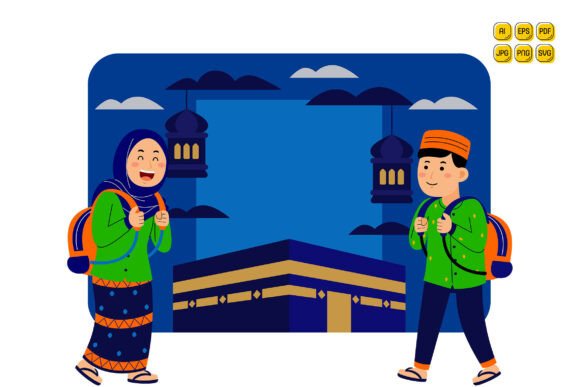
Muslim Couple Visiting Kaaba in Mecca
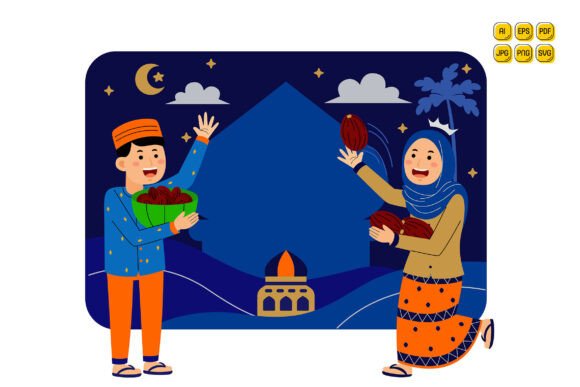
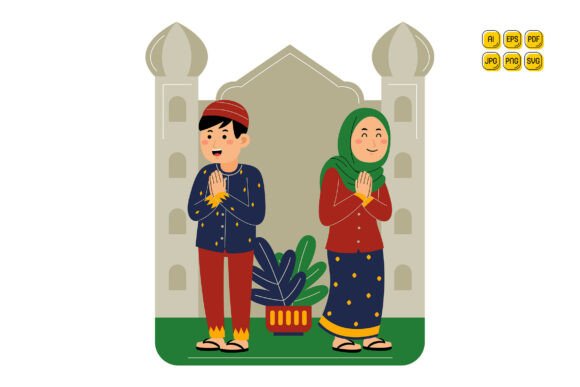
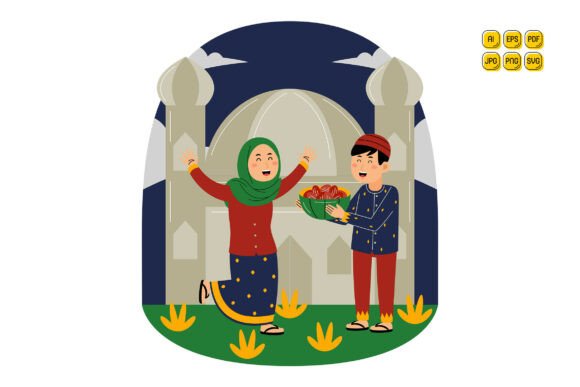
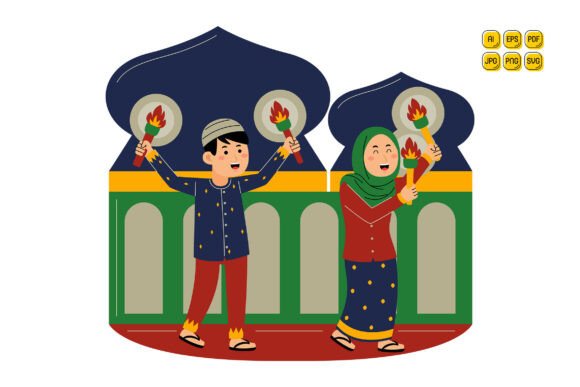
Imagine a serene, respectful moment: a Muslim couple standing side by side near the sacred Kaaba in Mecca—heads slightly bowed, hands gently raised in prayer, surrounded by the quiet reverence of Hajj or Umrah. This isn’t just a scene—it’s a powerful visual symbol of faith, unity, devotion, and shared spiritual journey. That image, captured thoughtfully and respectfully, forms the heart of a versatile design resource: Muslim Couple Visiting Kaaba in Mecca.
This collection isn’t about generic clipart or stiff stock photos. It’s a set of 100 hand-crafted vector illustrations built with intention—each one portraying modest, dignified, culturally authentic representations of a husband and wife engaged in worship at Islam’s holiest site. Every figure wears appropriate attire (abaya, hijab, thobe), maintains respectful posture, and honors the sanctity of the location—no exaggerated gestures, no symbolic inaccuracies, no visual clutter.
Why Designers and Creators Choose This Collection
Whether you're launching an Islamic education platform, designing a mosque newsletter, or building a wellness app for Muslim families, visuals matter deeply. A well-chosen illustration does more than decorate—it builds trust, signals cultural awareness, and invites emotional connection. With this set, you get flexibility without compromise: flat design clarity, clean lines, and intentional simplicity that works across digital and print.
The real value lies in how easily it adapts. Need a warm gold-and-ivory palette for a Ramadan campaign? Change the colors in seconds inside Illustrator. Want to place the couple on a soft gradient background for a landing page hero section? Resize effortlessly—the 5000 × 5000 px resolution ensures crispness at any scale. Planning a multilingual social media series? Swap out text elements while keeping the central figures intact—no redrawing needed.
Real-World Uses You’ll Appreciate
- Branding & Identity: Use a simplified silhouette version as part of your logo or brand mark—ideal for halal food delivery services, Islamic finance startups, or Quran learning apps.
- Social Media Posts: Pair a gentle illustration with a short reflection on marriage in Islam—or combine two scenes (e.g., couple praying + couple reading Quran) into a carousel post for Instagram or Facebook.
- Educational Materials: Teachers and curriculum designers use these in printable worksheets, digital flashcards, or animated explainer videos about Hajj rituals.
- Websites & Landing Pages: Place a softly shaded version behind a call-to-action like “Begin Your Umrah Journey” — instantly grounding the message in authenticity and meaning.
- Printed Resources: Brochures for travel agencies, wall art for Islamic centers, or framed prints for newlyweds’ homes—all benefit from high-res JPG and transparent PNG options.
What Makes These Illustrations Stand Out
Many design assets miss the balance between beauty and respect. This collection avoids common pitfalls: no facial features are overly detailed (honoring Islamic principles of modesty), no props distract from the spiritual focus (no phones, watches, or modern accessories), and every pose reflects actual rites—like facing the Kaaba during tawaf or standing quietly before entering Masjid al-Haram.
And because they’re delivered in multiple industry-standard formats—AI, EPS, SVG, PDF, JPG, PNG—you’re never locked into one workflow. Freelancers using Figma can import SVGs; marketing teams managing Canva libraries can drop in PNGs with transparency; print designers preparing large-format banners rely on the scalable AI and EPS files.
Things to Keep in Mind Before Using
While the illustrations are ready to use, thoughtful application matters. Consider your audience’s expectations: a youth-focused app might benefit from brighter, friendlier tones, while a scholarly publication may prefer muted, traditional palettes. Always pair imagery with accurate context—don’t imply ritual actions that aren’t part of standard practice (e.g., avoid showing prayer postures inside the Mataf area unless clearly labeled as educational).
Also remember: these are illustrative tools—not substitutes for lived experience or theological guidance. When supporting religious content, double-check terminology with trusted scholars or community advisors. The illustrations enhance communication—they don’t replace it.
Getting Started Is Simple—and Creative
You don’t need advanced design skills to begin. Open the AI file in Adobe Illustrator, select any shape (a scarf, a robe, the Kaaba outline), and adjust its fill color with the Eyedropper or Swatches panel. Combine elements freely: layer a couple illustration over a subtle geometric Islamic pattern, add a soft glow effect, or isolate just their joined hands to emphasize unity.
For educators, try creating a matching activity—print two versions: one with labeled body parts related to wudu, another with Hajj steps—and let students connect them visually. Bloggers can build consistent visual themes across posts: same couple, different color schemes per season (deep greens for Ramadan, soft blues for Eid). Small business owners running Etsy shops selling Islamic journals can embed these into cover designs—then offer custom color matching for clients.
It’s not just about convenience. It’s about having a foundation that respects tradition while empowering creativity. Whether you're illustrating a children’s book about the Five Pillars, designing a banner for your local masjid’s family day, or crafting a heartfelt email series for new converts—this collection gives you room to express meaning, clearly and kindly.
So whether you're sketching ideas on paper or fine-tuning pixels on screen, know that each illustration carries intention—not just aesthetics. It’s designed to support your goals: clearer communication, deeper resonance, and more inclusive representation—without extra effort, guesswork, or compromise.